Generalize entities
Generalize a drawing document's graphical entities by removing points that contribute no relevant geometric information at a given scale.
The dialog requests:
- Scale: denominator used to determine generalization thresholds. A point important at 1:500 may be irrelevant at 1:1000. Larger denominators remove more points and produce coarser entities. Change thresholds in the dialog opened with Advance Settings....
- Linear generalization: filters points contributing no information to an entity's geometry.
- Surface generalization: filters closed entities below a specified area threshold.
- Delete peaks: removes spikes caused by a displaced point in a line, resembling a triangle with a very acute angle.
- 3 dimensions: considers point elevations, retaining points whose elevations matter even if their plan positions do not.
- Entities from LiDAR data: enables different considerations for files generated from LiDAR, such as extracted boundaries. Requires:
- Linear tolerance: LiDAR measurement tolerance.
- Angular tolerance: angle tolerance between segments for rejecting spikes.
- Typology: entity origin, affecting processing decisions:
- General: unspecified general entities.
- Buildings: building boundaries, where artificial construction commonly produces alignment, perpendicularity and parallelism relationships to detect between segments.
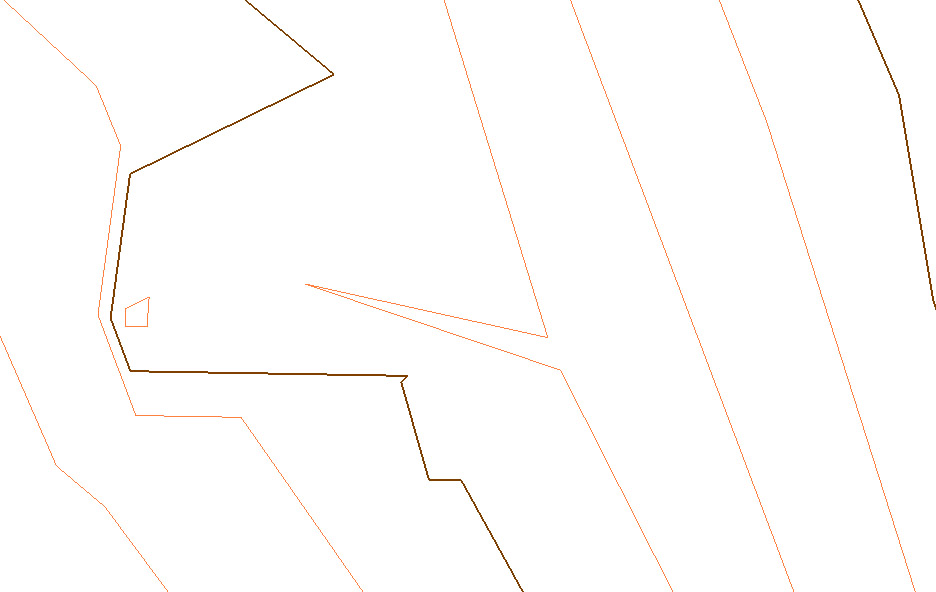
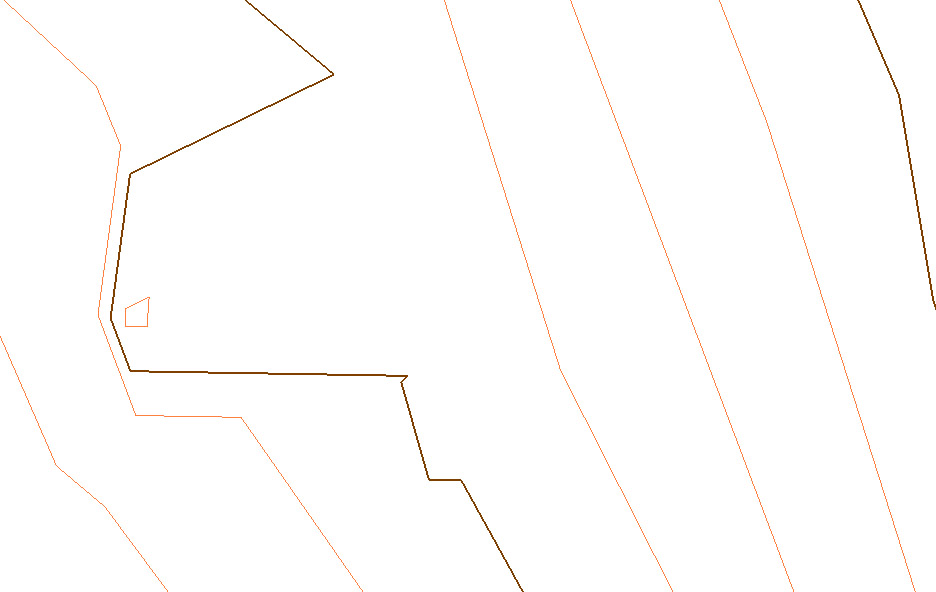
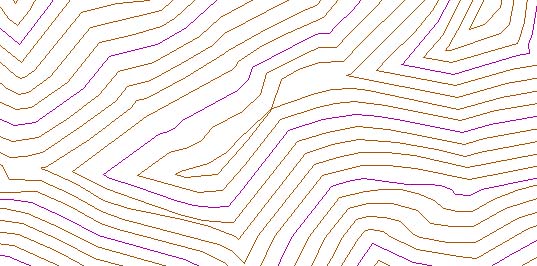
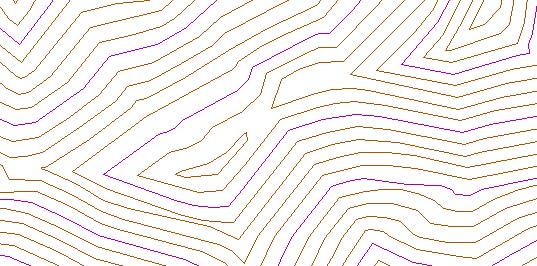
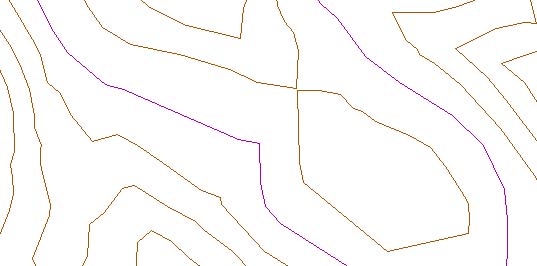
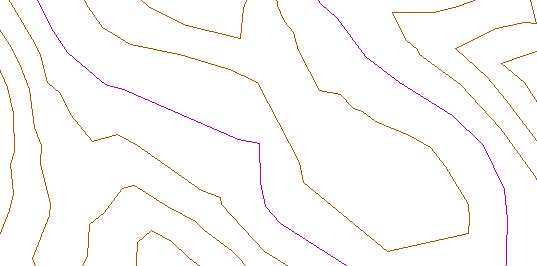
- Treat entities as contours: uses additional algorithms to join nearby surfaces or generate new surfaces where the original entity narrows. Can be applied to any entity set representing surfaces.
- Algorithm: generalization methods:
- Douglas-Peucker: widely used for vector generalization. Optional angle checking retains significant points.
- One point in every n: random; removes one point for each specified number of points.
- Lang
- Wang-Muller
- Reumann-Witkam